
Resource • Nov 23, 2026
Have You Checked In With Yourself Lately?
Here’s What Your Body Needs Based on What You’re Feeling.
Life can get so busy that sometimes we forget to check in with ourselves. This happens to the children in our lives, too.
That’s why we created a visual reminder for students at Momentous School. This helps kids name their a self-contained phenomenal experience. Feelings are subjective, evaluative, and independent of the sensations, thoughts, or images evoking them. They are inevitably evaluated as pleasant or unpleasant, but they can have more specific intrapsychic qualities, so that, for example, the affective tone of fear is experienced as different from that of anger. The core characteristic that differentiates feelings from cognitive, sensory, or perceptual intrapsychic experiences is the link of affect to appraisal. Feelings differ from emotions in being purely mental, whereas emotions are designed to engage with the world. any experienced sensation, particularly a tactile or temperature sensation (e.g., pain, coldness). (APA) and gives them quick, easy strategies to cope. It also reminds them of the The organ located in the head that controls thoughts, memory, emotions, touch, motor skills, vision, breathing, temperature, and every process that regulates the body. (APA)-body connection, a core component of our mental health curriculum. We know that listening to and caring for our bodies also helps us manage and regulate our feelings and energy levels.
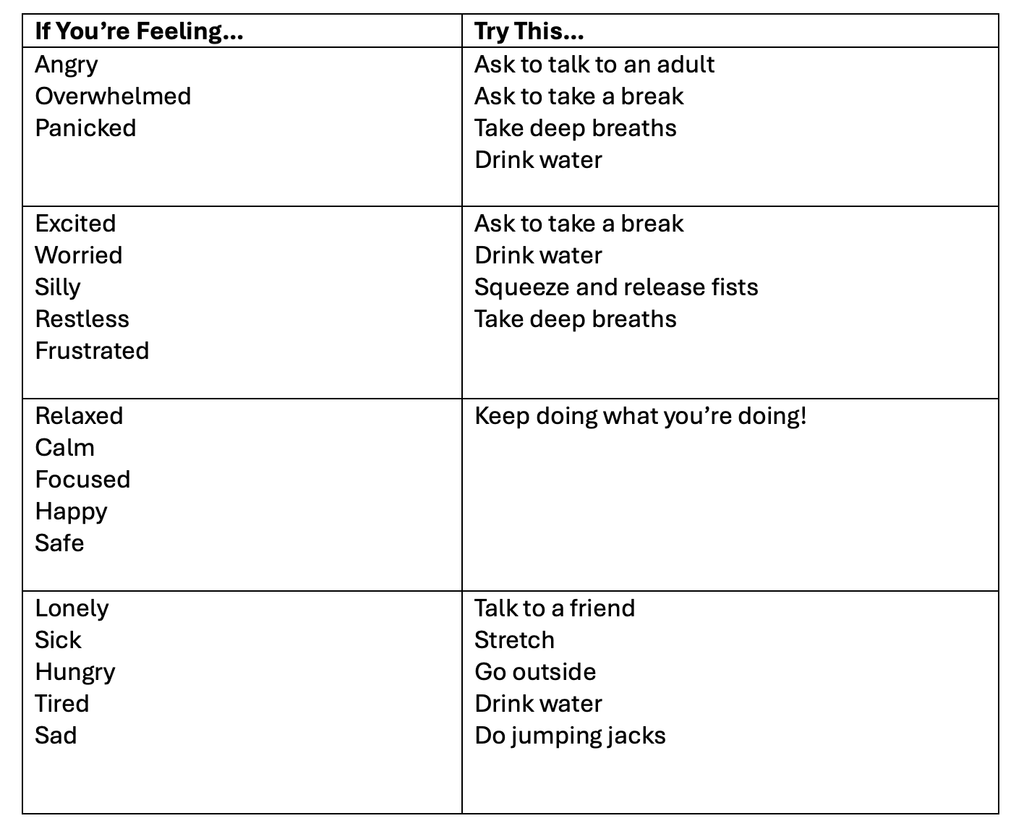
We call this display the “Pit Stop,” and it reminds students to “Check Your Engine.” It’s pretty simple. We color-code the feelings with the strategies. For example, if they’re feeling angry, we suggest taking a break or taking a deep breath. If they’re feeling tired, they can do a quick stretch or sip some water. But these aren’t just random strategies. We designed this display based on the Zones of Regulation, created by therapist Leah Kuypers. Being able to self-regulate helps us achieve our goals, maintain healthy relationships, and navigate life’s challenges. That’s why it’s such an important skill for kids to develop early on, as it will help them throughout their lives.
One thing to note about Kuypers’ Zones of Regulation is that there are no “bad” zones. The point is not to stay in one mode all the time. Instead, we want to help kids recognize that everyone moves through different zones throughout the day, and that’s okay. But no matter which zone we’re in, there are things we can do to help us manage our feelings and our energy levels to create a sense of wellbeing.
Take a look at the full display and then make it your own!
What to Include on Your Check In Display
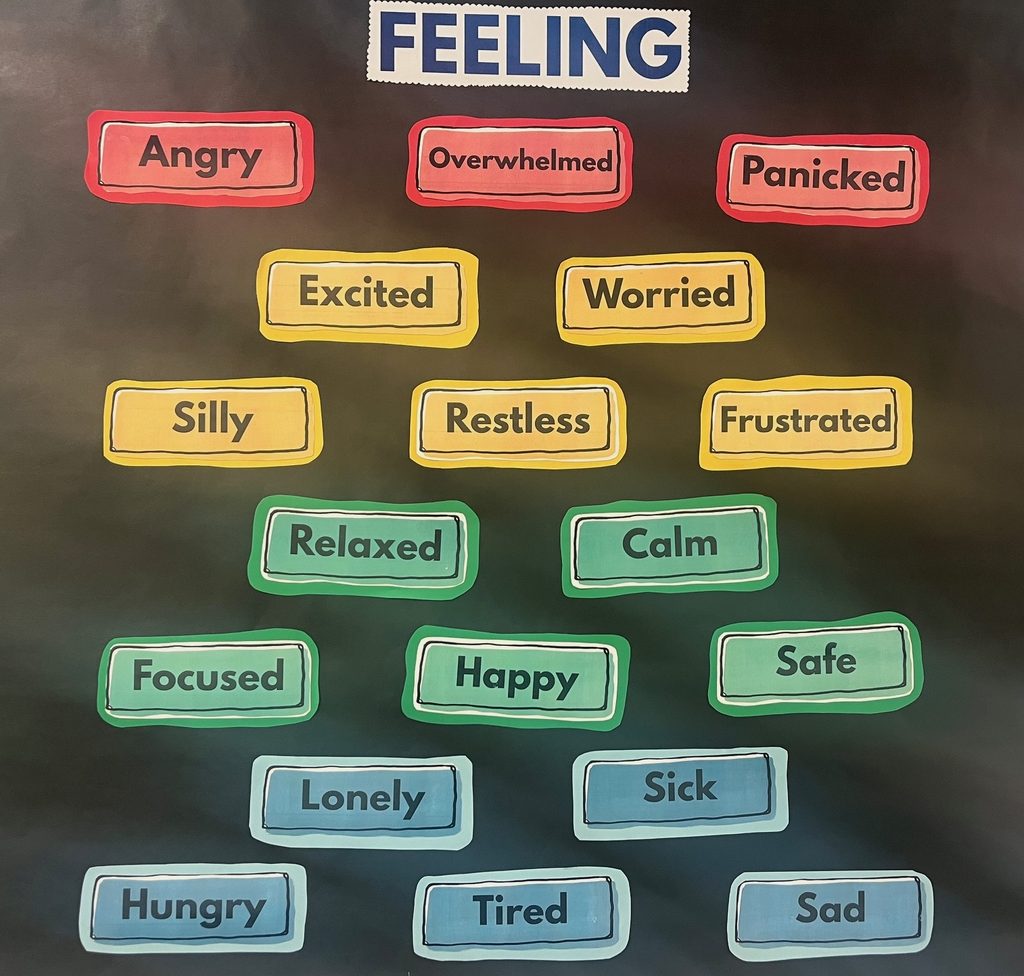
Try This…
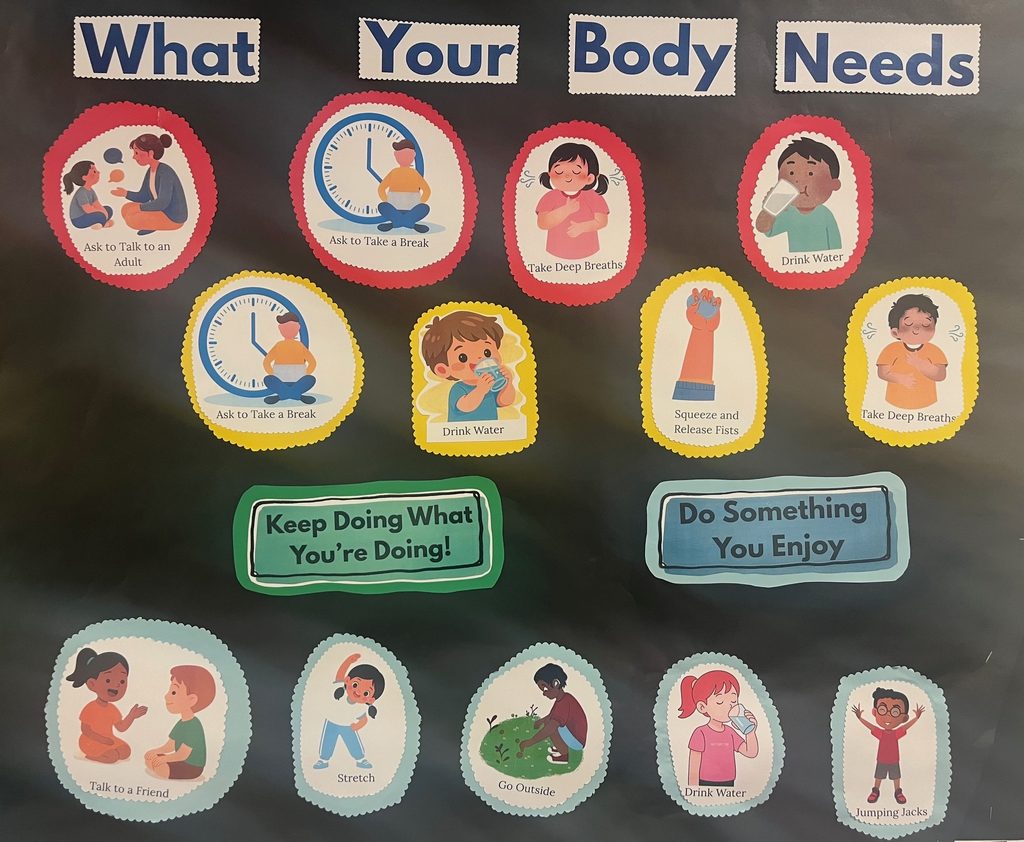
Here’s a breakdown of how these feelings and strategies go together:
We The belief that the future will be better than the present and one has the power to make it so. (APA) you have fun making this display your own! To learn more about The ability to manage one’s emotions, thoughts, and behaviors in different situations. (APA) strategies for children, download our self-regulation toolkit!
Free Download
Self Regulation Toolkit
Learn More Practical Tools to Help Children
Understand their Feelings,
Regulate Their Bodies and Manage
Impulses.