
Article • Dec 11, 2015
The ACE Study
The rougher your childhood is, the more challenges you’ll face later in life. This is the premise behind the ACE study. What is it? Learn more…
The rougher your childhood is, the more challenges you’ll face later in life. This is the premise behind the Adverse Childhood Experiences (ACE) study. Initiated 20 years ago by the Centers for Disease Control and Prevention and Kaiser Permanente’s Health Appraisal Clinic, this study proved to be one of the largest investigations to ever assess the link between childhood maltreatment and adult health and well-being.
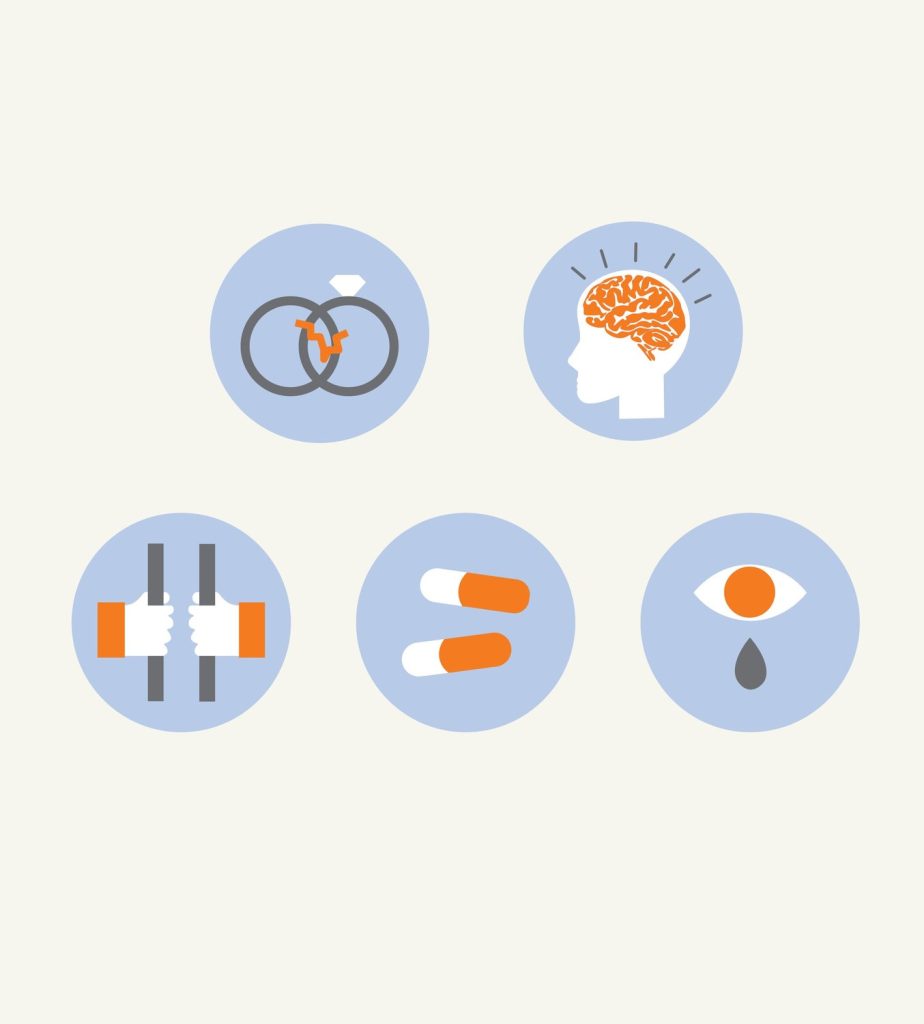
Here’s what the study measured (10 ACEs total):
- Physical, sexual and verbal abuse
- Physical and emotional neglect
- A family member who is:
- Depressed or diagnosed with another mental illness
- Addicted to alcohol or another substance
- In prison
- Witnessing a mother being abused
- Losing a parent to separation, divorce or another reason
This list is not exhaustive of all An emotional response to an event that is perceived as harmful or threatening, and that has lasting negative effects on a person's physical, mental, social, emotional, or spiritual well-being. (APA) that a child could experience, but does account for some of the most common.
Here’s what the study found:
- ACEs are very common, and 64% of adults have at least one.
- They often don’t occur in isolation – people who have one ACE have an 87% chance of having two or more.
- A higher number of ACEs (without intervention) is correlated with a greater risk for chronic disease, mental illness, violence and being a victim of violence. ACEs are responsible for workplace absenteeism and contribute to chronic health, mental health, economic health and social health issues.
So, what does this tell us?
We know that toxic A physical, mental, or emotional factor that causes bodily or mental tension. (APA) is harmful in young people, but the ACE study sheds light on the long-term implications of this early environment. We no longer just intuitively know that it’s harmful for kids; we have data to support it.
If someone has experienced one (or five, or ten) ACEs as a child, are they doomed?
No. Someone with a high ACE score is certainly not guaranteed to have a lifetime of medical and/or A state of well-being in which an individual realizes their own abilities, can cope with normal stresses of life, can work productively, and is able to contribute to their community. (WHO) problems. There is great news in the world of neuroscience, and it’s that our brains are plastic. With work, the The organ located in the head that controls thoughts, memory, emotions, touch, motor skills, vision, breathing, temperature, and every process that regulates the body. (APA) can repair and rebuild areas that have been damaged by toxic stress. Think of those toy train sets that children play with. The brain may have a trauma track that is well worn through repeated use. But as we work through therapy and build up The ability to adapt well to adversity, trauma, tragedy, threats, or significant sources of stress. (APA) and healing, the brain can form new tracks, and just like the toy train sets, can switch a lever that essentially jumps over the trauma tracks. The brain can rewire itself to slowly undo many of the symptoms of toxic stress.
Many of us have experienced such Adverse Childhood Experiences in our lives. We believe that there is always The belief that the future will be better than the present and one has the power to make it so. (APA). As professionals who work with these children, we have to expect momentous outcomes from all children, and we have to hold on to hope for the families we work with.
To take the test and to learn more about the impact and the current research and implementation of the ACE study, we recommend the website www.acestoohigh.com.
More resources