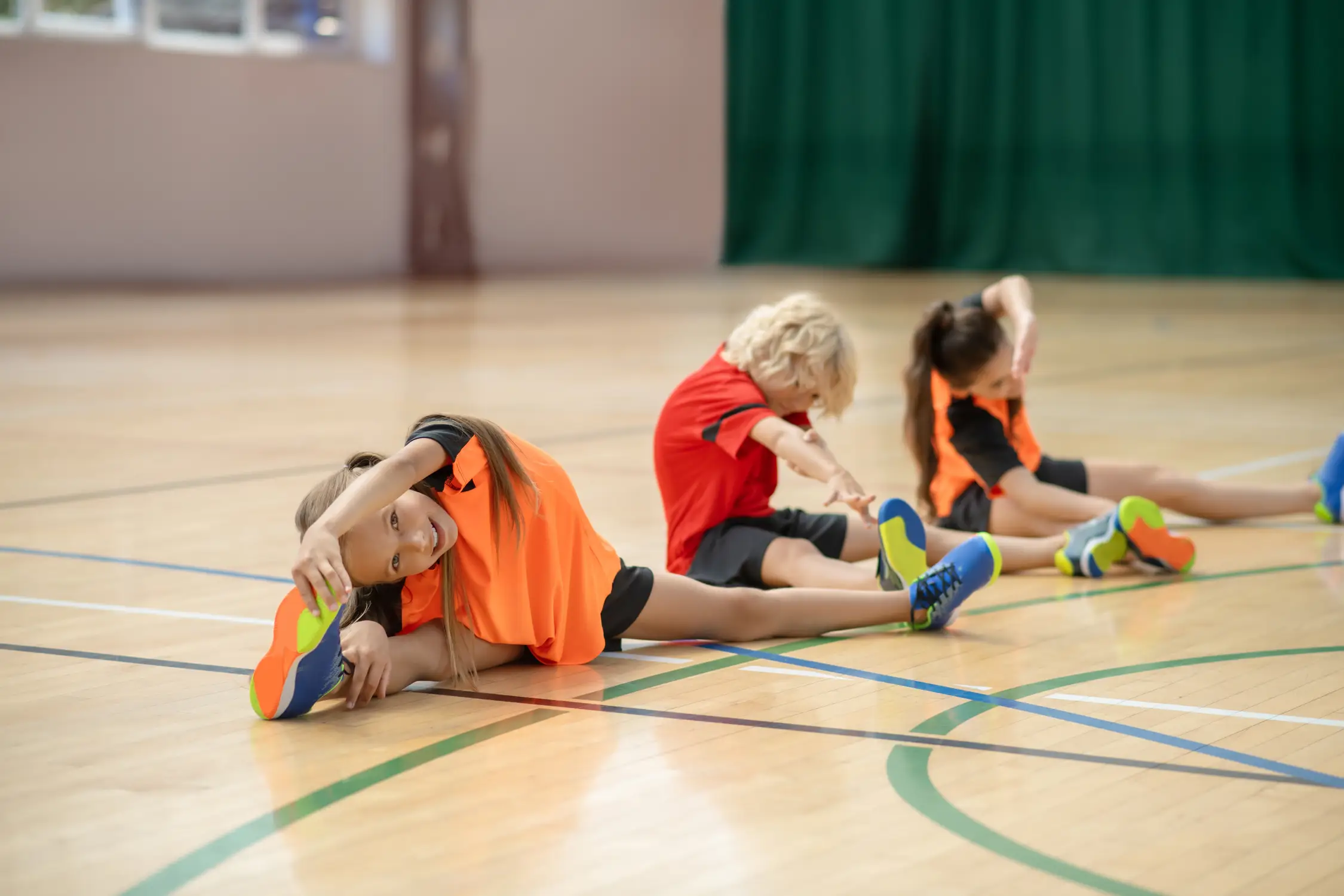
Learn how our Momentous Institute PE teacher integrates mental health into her class on a daily basis.
You may think Physical Education is all fun and games. And you're right! But the fun and games are also part of a powerful tool that supports both our physical and mental health!
Many students today face incredible amounts of stress and anxiety. But in PE, they get to move, play and just be themselves—important elements of mental health. With an explicit focus on mental health, PE can be a safe place for all children to thrive.
We sat down with Momentous Institute’s Coach Lauren Carr to learn how she integrates mental health into her PE class every day. Here are some practical, easy-to-implement tools she shared that can be used in any school or sports setting.
Create Opportunities for Every Student to Feel Successful
Kids build confidence when they experience the feeling of success. Coach Carr creates stations and activities that allow every kid to try things in the way that best works for them. There’s no “this way or no way” mentality in her class.
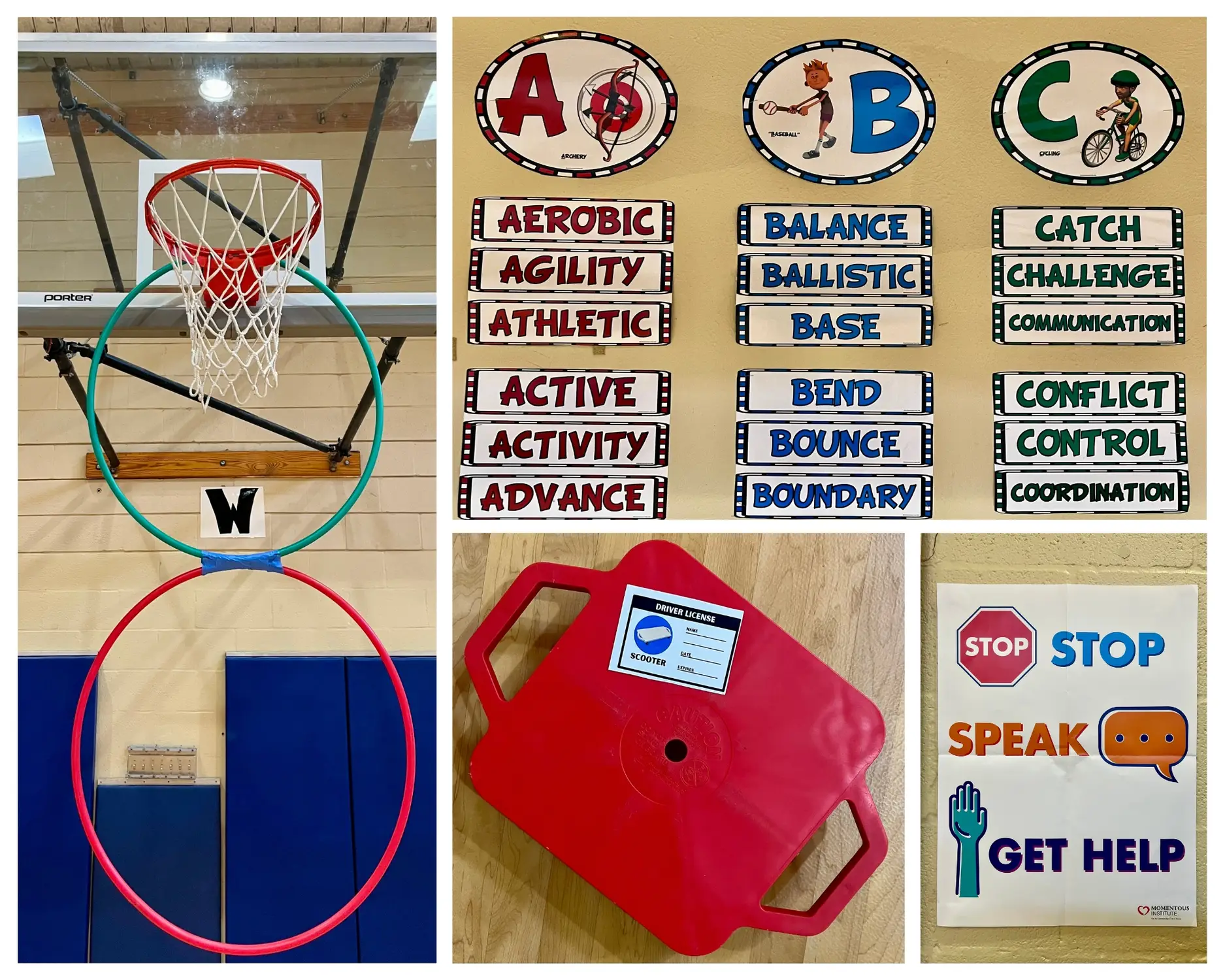
For example, a 5th-grade class was recently playing basketball. Instead of teaching the traditional method, which only a few kids can achieve, she created options. Students could shoot through the net or from a hula hoop hung from the rim.
“It doesn’t matter if it wasn’t in the basketball hoop. It’s still a hoop,” Coach Carr explains. “My goal is that every student leaves the gym feeling like they accomplished something.”
Create Spaces for Calm and Focus
P.E. is often much louder than a traditional classroom, which can be dysregulating or overwhelming for some kids. Designated spaces and clear messaging let students know they can take a break when they feel overwhelmed and how to ask for help when they need it. Coach Carr gives students a sense of comfort and ownership of the space by:
Integrate Mental Resets Through Movement
Transitions can be challenging for kids, as they move from the structure of the classroom to the PE space. Coach Carr uses simple movement-based strategies to help students transition their minds and bodies from the classroom to the gym, including:
Another quick tool: Coach Carr also meets students in the hallway outside the gym rather than having them enter on their own. This makes her part of the transition from the moment they arrive.
Provide Opportunities to Develop Grit and Resilience
During PE, students often learn brand-new skills, which can at times lead to frustration. Coach Carr saw this firsthand when her students were learning to play basketball. They struggled with dribbling, keeping their eyes on the ball, and scoring. But they didn’t stop trying.
Coach Carr says they learned to stay focused, let their emotions settle, stay on target, and keep practicing. “They kept pushing, kept going, and they didn’t give up." Students learned that improvement comes through practice and perseverance. These types of experiences help build resilience beyond the gym. When she spots it, she names it. Coach Carr uses the opportunity to praise students, not just when they make a basket or score a goal, but when they persevere and overcome obstacles.
Build Confidence and Core Memories
PE allows students to shine in ways the classroom environment does not. For students who find it difficult to sit still in the classroom, PE serves as a much-needed outlet. It’s also an opportunity to provide lasting memories that create positive associations with school.
To do this in her class, Coach Carr uses something she calls “Scooter School,” where students earn their scooter licenses through mastering certain skills. And those licenses become keepsakes even after they graduate from Momentous, creating a positive core memory that they can look back on.
Tie PE into Academics
Physical Education goes way beyond the traditional games and activities we associate with time spent in the gym. Coach Carr integrates math, vocabulary, and language acquisition into activities, helping students understand the purpose behind what they’re doing.
When she asks the kids why they do the obstacle course, they tell her, because it’s fun. But it’s much more than that. “It’s to work on different skills like agility, hand-eye coordination and balance,” she says. “It’s fun, but it has other benefits, too. So, I try to point those out.”
Physical Education supports both the body and mind. And when students feel regulated and confident, learning in the classroom improves, too—making PE essential for students’ overall wellbeing.
Share with