
Skip to content
Momentous Institute Logo Momentous Institute Logo
  • Our Story
  • Our Impact
  • Our Team & Board
  • Careers
  • Contact Us
  • Annual Report
  • Press
  • Mental Health Services
  • Nature-Based Services
  • Professional Training
  • Clinical Training
  • Momentous School
  • Changemakers Curriculum
  • Parenting Community
  • All Resources
  • For Mental Health Professionals
  • For Education Professionals
  • For School Leaders
  • For Caregivers
  • For Adults
  • FREE Mental Health Toolkit
  • Upcoming Training & Events
  • On-Demand Training
  • School Tours
  • Squeeze the Day
DonateDonate Monthly


Article • Dec 09, 2018

Are You Grateful?

Gratitude is a learned trait. Are you modeling gratitude?

Caregivers, Parenting, Social Emotional Health

Think about it – from infancy, kids have (hopefully) nearly all their wants and needs met by someone else. They learn pretty early to cry, whine, pout, or otherwise express their needs, and adults respond. Basically, they’re pretty accustomed to dependence. It’s not often that they’ll stop and show gratitude for their helper.

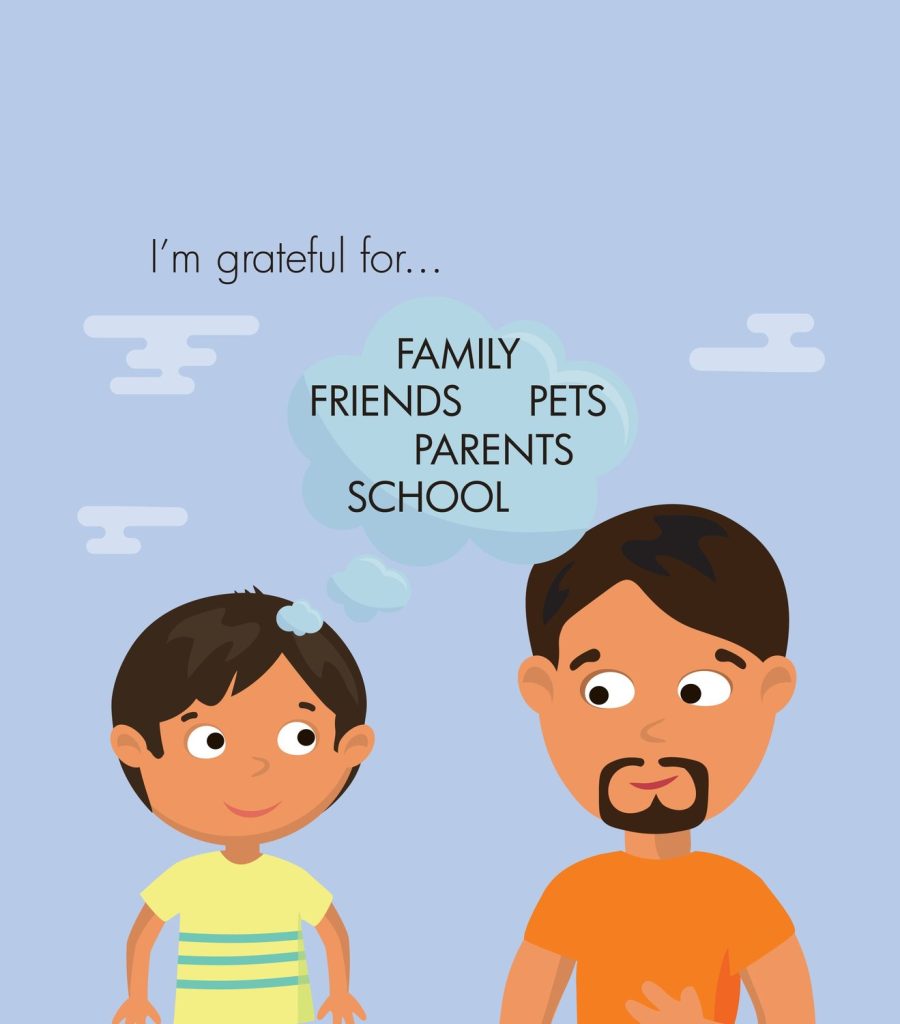
Gratitude is a learned trait. It’s not inherent in young children. That means that it’s on us, as adults, to help kids express gratitude. The best way to do this, like nearly all positive behavior, is through modeling. So take a moment to think about your own sense of gratitude. Do you reflect back the things that you are grateful for? Try using more grateful language in your everyday life, especially in front of children. Here are some examples:

Wow, that was nice of that car to let me in. I better wave so she knows that I appreciate her kind gesture.

Carlos just followed my directions quickly and quietly. I am grateful that he is being a great listener today.

Thank you for telling me that story. I know it was probably hard for you to talk about. I am grateful that you trust me with your stories and are willing to share them with me.

The more we use this type of language in front of kids, the more they’ll pick up on it. Plus, the more kids feel valued, the more likely they are to make good choices in the future, and the more we’ll have to be grateful for. That’s a good cycle to be a part of!

Share

  • Share on Facebook
  • Share on X
  • Share on LinkedIn
  • Share by email

More resources

Article

6 Ways to Keep Your Mental Health Strong Over Summer

Video

What is Mental Health?

Article

Three Ways to Focus on Love this Week

Article

Healing in Community when the News is Distressing

See all

Momentous Institute Logo

Stay updated

Stay in the loop on upcoming events and latest resources.

"*" indicates required fields


Who we are

  • Our Story
  • Our Impact
  • Team & Board
  • Careers

What we offer

  • Mental Health Services
  • Professional Training
  • Momentous School
  • Changemakers Curriculum

Our Resources

  • Resource Library
  • For Mental Health Professionals
  • For Education Professionals
  • For Parents
  • For Adults
  • Research

Training & Events

  • Upcoming Training & Events

Contact

  • Contact Us
  • Press
  • Privacy Policy

Facebook Twitter Instagram LinkedIn
© 2026 Momentous Institute. All rights reserved.