
Resource • Nov 20, 2026
Calming Strategies for Kids: Tools and Activities to Reset and Regulate
Calming Strategies for Kids: Tools and Activities to Reset and Regulate
We’ve all been there – overcome with emotion, angry, frustrated. Sitting in traffic for 45 minutes? Not the best way to start the day. How would we feel if every morning when sitting in traffic, the only way we knew how to handle our a self-contained phenomenal experience. Feelings are subjective, evaluative, and independent of the sensations, thoughts, or images evoking them. They are inevitably evaluated as pleasant or unpleasant, but they can have more specific intrapsychic qualities, so that, for example, the affective tone of fear is experienced as different from that of anger. The core characteristic that differentiates feelings from cognitive, sensory, or perceptual intrapsychic experiences is the link of affect to appraisal. Feelings differ from emotions in being purely mental, whereas emotions are designed to engage with the world. any experienced sensation, particularly a tactile or temperature sensation (e.g., pain, coldness). (APA) was just to scream and act out? Our blood pressure and An emotion characterized by feelings of tension, worried thoughts, and physical changes like increased blood pressure. (APA) would go up, and we’d just make ourselves even more frustrated. But fortunately, we have other ways of coping with these feelings, whether it’s switching on some good tunes, saying a quiet mantra or prayer, or taking deep breaths. (And let’s face it, sometimes we still scream and act out!)
If this is what it’s like for adults, imagine what it is like to be a young child overcome with emotion. Kids who are young don’t yet know how to identify their feelings, isolate the element that is frustrating, and work on coping solutions. Often young kids just are angry, or frustrated, or sad, or excited, and don’t have an outlet for their big emotions.
When a child has big feelings, we all need strategies to help them co-regulate. At Momentous Institute, we see behavior as communication and an opportunity to learn new skills. We don’t look at misbehavior as something wrong with a child. Rather, we see misbehavior as skill deficits. What skill is this child still working on? Why did she throw a book? What skill does she need to develop there?
In these moments, we want kids, and their grownups, to have the tools they need to help them regulate and reset. Here are some simple strategies to use with your kids whether it’s at home or in the classroom.
Setting Up a Calm Down Space
A calm down space should be comfortable for students and can include things like a beanbag, pillows, blankets or something soft to cuddle like a collection of stuffed animals. It can also include a feelings poster or set of feelings flashcards to help students talk through their emotions.
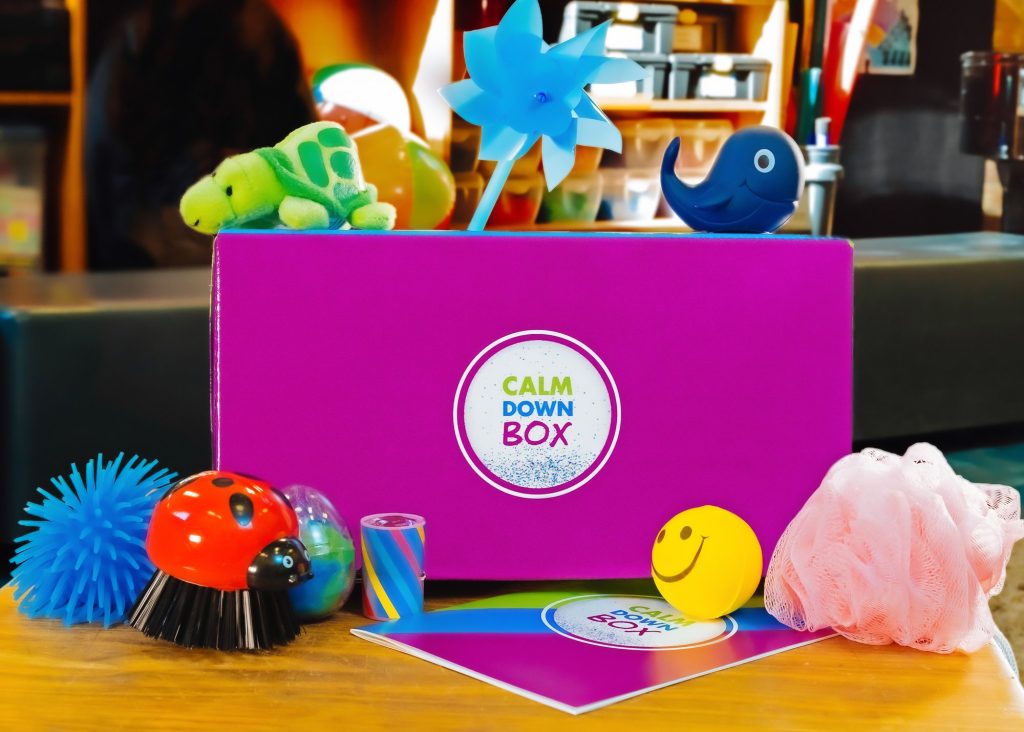
This space should provide regulation tools for students. Some teachers use a calm down basket to gather sensory materials that students can use to help them regulate their strong emotions. The materials should represent different sensory experiences. For example:
The calm down area should be available at all times, and students can self-select when they need to use it. This helps them identify when they’re beginning to feel a big emotion and provides them an opportunity to manage it on their own, before it becomes a problem. It is important to establish clear expectations for how students can use the calm down area, including allowing only one student at a time, and explaining how to properly use and care for the materials. Students may choose to use the area on their own or may need support from an adult. Allow them to first enter the calm down space and be alone for a moment before checking in to see if they would benefit from your co-regulation.
Each classroom in Momentous School has a calm down space that is solely dedicated to helping children manage their own behavior. Each one is different, but they all have common elements.
Feelings names: The calm down space has pictures and names of feelings. The point of this is to give young children a really robust vocabulary around feelings. When kids know more than “sad” and “happy”, they’re able to better understand the different emotions that they feel during the day. A child might feel ashamed, frustrated, or anxious, and knowing what they’re feeling is the first step to managing those feelings.
Calm down basket: Simply put, the calm down basket is a small collection of tools that can help a child regulate themselves when they’re feeling overwhelmed. The basket is full of small objects – things like a A physical, mental, or emotional factor that causes bodily or mental tension. (APA) ball, silly putty, a kaleidoscope, and toys with a variety of textures.
Any time a child is feeling overwhelmed, they can choose to grab something from the calm down basket. Often a child will just need a few minutes alone to self-regulate. But asking a child to sit in the corner and calm down will often not get the results we The belief that the future will be better than the present and one has the power to make it so. (APA) for. Instead, giving them something to hold and do with their hands while they calm down will be a good distraction.
Often when young kids act out, it is a call for skill building. The child is telling us, “I am overwhelmed. I don’t have the tools to calm myself down.” When we can help a child find the tools they need, we are setting them up for long-term success.
A glitter ball: We love the glitter ball and so do our kids. Read on to learn how to create your own version at home or in the classroom.
Create Your Own Glitter Jar
The glitter ball our favorite way to teach kids about their brains. Kids and adults immediately get it. It’s easy to understand and a great tool to pick up and use when you’re feeling overwhelmed. (Almost every person who works at Momentous Institute has a glitter ball on their desk, and it’s pretty common to hear us telling our co-workers, “Settle your glitter. It’s going to be okay.”)
One of the questions we get a lot is, “Where can I get one of those glitter balls?” So we wanted to give you a way to take the lesson and make it yourself. It’s the glitter jar!
Here’s what you need:
- A small jar or container. We use plastic spice jars with a screw-on lid. A baby food jar would work too.
- Glitter glue
- Extra fine glitter
- Water
And here’s how you do it!
Step One:
Fill the jar almost to the top with water.
Step Two:
Add in some glitter glue. We’ve found about 4-5 seconds of squeezing does the trick. (But you can always experiment, dump it out, and try again.)
Step Three:
Add just the teensiest bit of glitter. Trust us, you don’t need a whole lot. We recommend the tip of a spoonful (but again, feel free to experiment!)
Step Four:
Screw the lid back on! Make sure it’s tight. If you’re doing this with little kids, you’ll want to really check all the bottles to make sure those lids are on there, or you’ll end up with a wet, glittery mess.
Step Five:
Shake it up! Then hold it steady. Watch the glitter fall. Take some deep breaths.
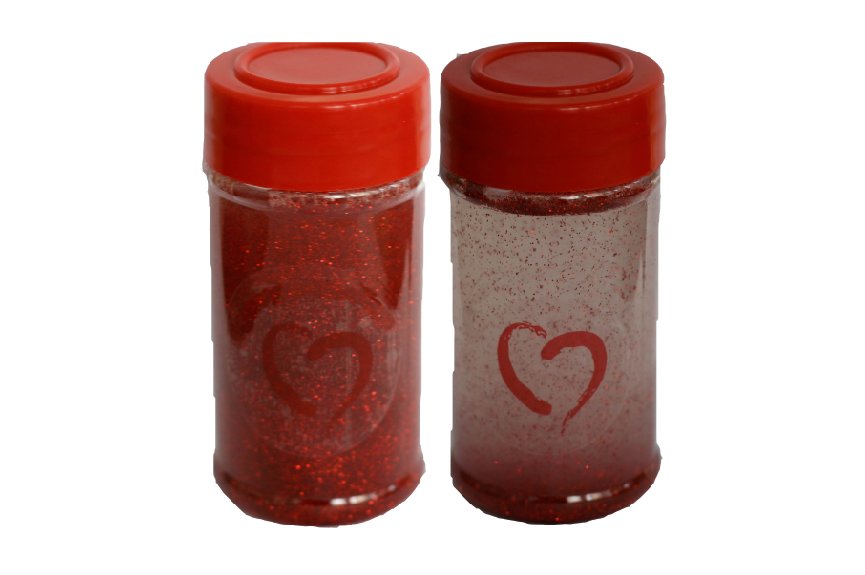
Here’s what we say to kids as we do this activity (with the ball or the jar.)
Look at the glitter jar. It is like your The organ located in the head that controls thoughts, memory, emotions, touch, motor skills, vision, breathing, temperature, and every process that regulates the body. (APA). Now shake it up! This is your brain when you are excited, scared, angry, happy, sad, or feeling any BIG emotion. Wow! Look at all that glitter. It is hard to see clearly. Do you think that when our brains are like this that we are able to make good decisions? Do you think we are able to learn and use our brains?
So, what do we need to do? (The kids will say, “Let the glitter fall!”) That’s right, we need that glitter to settle. Let’s hold it really steady. Let’s take some breaths together. Breathe in. Breathe out. Wow, look at the glitter settle at the bottom. Now let’s look through. Can you see to the other side? Do you think our brains are ready and able to learn now? Take a look and see that the glitter is still there. Our big emotions don’t just go away. We still carry them with us. But now we know how to settle our glitter and get our brains thinking clearly.
Do you ever need to settle your own glitter? We definitely recommend making an extra glitter jar for yourself. We all need to settle our glitter from time to time!
We first learned about “settling our glitter” from Susan Kaiser Greenland. For this and many other ideas of ways to bring The practice of being aware and present in the moment, and accepting one's feelings, thoughts, and bodily sensations without judgment. (APA) into your home or school, check out her book, The Mindful Child.
Other Calming Strategies for Kids
Cope Cakes
We love this idea from play therapist Paris Goodyear-Brown. If you have a child who has a hard time pushing through when something is difficult, have them make a set of cope-cakes. These are individualized self-help strategies that they can rely on next time they are faced with an obstacle.
When the child is in a calm state, ask them to think of some ways that they can help themself next time they feel frustrated. Really encourage them to think of ideas on their own. They’re much more likely to try them if they came up with the idea themselves. With each suggestion, ask, “Is it good for you? Is it good for others? Is it easy to do? Does it make you feel better?” If the answer to each of these questions is yes, have them write the strategy on the inside of a cupcake wrapper. They can arrange their wrappers onto a piece of paper like a set of cupcakes. Next time they are frustrated by an obstacle, remind them about their “cope-cakes” and allow them to choose a strategy. Follow up to see whether it helped them overcome their frustration.
Free Download
Self Regulation Toolkit
Learn More Practical Tools to Help Children
Understand their Feelings,
Regulate Their Bodies and Manage
Impulses.